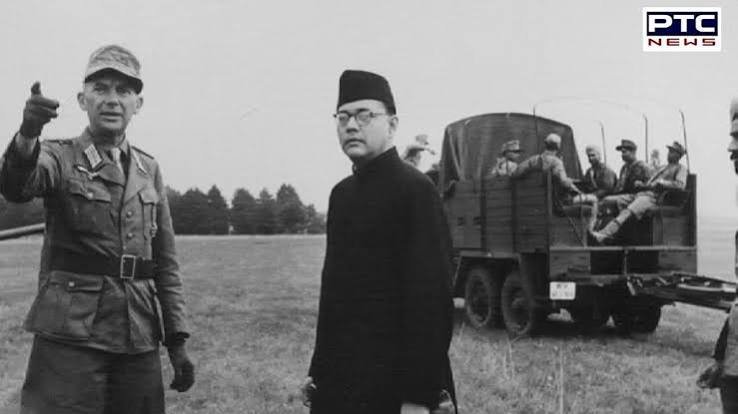
During the height of World War II, as the non-violent Quit India Movement stirred the Indian mainland, Netaji Subhas Chandra Bose forged a radical parallel path to liberation. Rejecting the notion that British colonialism could be defeated solely through civil resistance, Bose sought to exploit Great Britain’s wartime vulnerability by organizing an armed liberation army from abroad.
By uniting Indian prisoners of war (POWs) and civilian expatriates across Southeast Asia under the banner of the Azad Hind Fauj (Indian National Army, or INA), Bose mounted an unprecedented military challenge against imperial forces. His dynamic leadership, uncompromising nationalism, and creation of a provisional government marked one of the most dramatic chapters in the Indian freedom struggle.
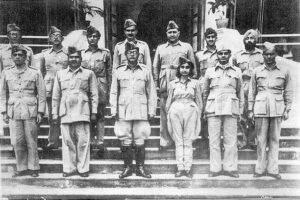
1. Radical Roots: Ideological Rift with the Congress
A charismatic leader and former President of the Indian National Congress (elected at Haripura in 1938 and re-elected at Tripuri in 1939), Subhas Chandra Bose represented the uncompromising left-wing faction of the nationalist movement alongside Jawaharlal Nehru.
                    THE TRIPURI CRISIS & CONGRESS SPLIT (1939)
  +-------------------------------------------------------------------+
  | IDEOLOGICAL CLASH WITH GANDHI                                     |
  | Bose advocated issuing an ultimatum to Britain for immediate      |
  | independence, leveraging the impending European war. Gandhi favored|
  | a compromise approach without taking advantage of Britain's crisis.|
  +-------------------------------------------------------------------+
                                    |
                                    v
  +-------------------------------------------------------------------+
  | RESIGNATION & FOUNDING OF FORWARD BLOC                            |
  | Unable to form a workable executive committee due to opposition   |
  | from Gandhi's core supporters, Bose resigned as INC President and |
  | formed the **Forward Bloc** inside the Congress to consolidate     |
  | leftist anti-imperialist forces.                                  |
  +-------------------------------------------------------------------+
Placing Bose under house arrest in Calcutta in 1940 did not stop him. In January 1941, he executed a daring escape—disguised as a Pathan religious scholar named Maulvi Ziauddin—traveling through Peshawar, Afghanistan, and the Soviet Union before reaching Berlin, Germany.
2. Formation of the INA: From Mohan Singh to Netaji
The idea of leveraging Indian prisoners of war captured by Axis forces in Southeast Asia was first conceived by Captain Mohan Singh, an officer of the British Indian Army, alongside Japanese officer Major Fujiwara and Indian independence activist Rash Behari Bose.
                  THE EVOLUTION OF THE AZAD HIND FAUJ
  ===================================================================
                        THREE STAGES OF FORMATION
  ===================================================================
                                 |
     +-------------------+-------+-------+-------------------+
     |                   |               |                   |
     v                   v               v                   v
  [ CAPTAIN MOHAN SINGH ]  [ RASH BEHARI BOSE ]    [ ARRIVAL OF NETAJI ]
  Formed the 1st INA in    Presided over the       Bose arrived in Singapore
  Singapore (1942) from    Indian Independence     via submarine (1943) and took
  captured Indian POWs.    League to unify         supreme command of the
                           diaspora networks.      reorganized 2nd INA.
The Submarine Journey and Arrival in Singapore
In February 1943, realizing Germany’s inability to provide direct military support to India, Bose embarked on a hazardous 90-day submarine journey aboard the German U-180, transferring at sea near Madagascar to the Japanese submarine I-29. Arriving in Singapore in July 1943, he took charge of the Indian Independence League and assumed supreme command of the reorganized INA.
It was here that he assumed the title of “Netaji” (Respected Leader) and issued his famous battle cries: “Dilli Chalo!” (Onward to Delhi!) and “Give me blood, and I shall give you freedom!”
3. The Provisional Government of Azad Hind (1943)
On October 21, 1943, Netaji formally proclaimed the establishment of the Provisional Government of Free India (Arzi Hukumat-e-Azad Hind) in Singapore.
              STRUCTURE OF THE AZAD HIND GOVERNMENT
  ===================================================================
                 HEAD OF STATE: SUBHAS CHANDRA BOSE
  ===================================================================
                                 |
           +---------------------+---------------------+
           |                                           |
           v                                           v
  [ MILITARY BRIGADES ]                     [ THE RANI JANSI REGIMENT ]
  • Gandhi Brigade                           • History-making all-female combat
  • Nehru Brigade                             unit commanded by **Captain Lakshmi
  • Azad Brigade                              Swaminathan (Sahgal)**.
  • Subhas Brigade
Diplomatic Recognition and Territorial Base
The Azad Hind Government was recognized by nine nations, including Japan, Germany, Italy, Burma, and the Philippines. Japan handed control of the captured Andaman and Nicobar Islands to Netaji in December 1943, which he renamed Shaheed Dweep (Martyr Island) and Swaraj Dweep (Self-rule Island).
4. The Military Campaign: Imphal and Kohima (1944)
In early 1944, the INA, fighting alongside the Imperial Japanese Army’s 15th Army, launched Operation U-Go—a military offensive aimed at penetrating Northeast India through Burma.
                    THE NORTHEAST CAMPAIGN (1944)
  +-------------------------------------------------------------------+
  | MARCH 1944: CROSSING THE INDIAN BORDER                            |
  | INA troops cross the Burmese border into Manipur, raising the     |
  | Indian tricolor flag at **Moirang** on March 14, 1944.             |
  +-------------------------------------------------------------------+
                                    |
                                    v
  +-------------------------------------------------------------------+
  | APRIL–JUNE 1944: THE BATTLES OF IMPHAL AND KOHIMA                 |
  | INA and Japanese units lay siege to British garrisons at Kohima  |
  | and Imphal in brutal jungle conditions.                           |
  +-------------------------------------------------------------------+
                                    |
                                    v
  +-------------------------------------------------------------------+
  | RETREAT AND COLLAPSE                                              |
  | Severe monsoon rains, lack of air support, interrupted supply     |
  | lines, and disease force a tragic strategic retreat back into     |
  | Burma with heavy losses.                                          |
  +-------------------------------------------------------------------+
Following the surrender of Japan in August 1945, Netaji attempted to reach the Soviet Union via Manchuria to continue his anti-colonial campaign. According to official historical reports, his plane crashed after taking off from Taihoku (Taipei, Taiwan) on August 18, 1945, resulting in his death, though his ultimate fate remains a subject of intense debate in Indian historiography.
5. The Red Fort Trials and National Impact (1945–1946)
Although the INA failed to achieve its immediate military goal on the battlefield, its ultimate political impact inside mainland India was profound.
When the British military authorities court-martialed three senior INA officers—Colonel Prem Sahgal (Hindu), Colonel Gurbaksh Singh Dhillon (Sikh), and Major General Shah Nawaz Khan (Muslim)—at the historic Red Fort in Delhi in late 1945, it sparked nationwide rage.
                 THE RED FORT TRIALS & MASS OUTRAGE
  ===================================================================
                       DEFENDING THE INA HEROES
  ===================================================================
                                 |
           +---------------------+---------------------+
           |                                           |
           v                                           v
  [ PAN-INDIAN DEFENSE COMMITTEE ]           [ WIDESPREAD MUTINIES ]
  Top lawyers including Bhulabhai Desai,      Unrest spreads to armed services,
  Tej Bahadur Sapru, and **Jawaharlal         triggering the **Royal Indian Navy (RIN)
  Nehru** defended the officers.               Mutiny** in Bombay (February 1946).
Faced with massive street protests, strikes, and mutinies among Indian soldiers in the British armed forces, the Commander-in-Chief, General Claude Auchinleck, felt compelled to commute the sentences of the INA officers, admitting that continuing punishment risked a full-scale armed revolt.
6. Overview of the INA and Azad Hind Movement
| Parameter | Details & Historical Milestones |
| Supreme Commander | Subhas Chandra Bose (“Netaji”). |
| Key Military Units | Subhas Brigade, Gandhi Brigade, Nehru Brigade, Rani of Jhansi Regiment. |
| Provisional Capital | Rangoon (Burma) and Singapore. |
| Historic Slogans | “Dilli Chalo”, “Jai Hind”, “Give me blood, and I shall give you freedom!” |
| Key Battles | Siege of Imphal, Battle of Kohima, Moirang Flag Hoisting (1944). |
| Post-War Legacy | Red Fort Trials (1945–46), Royal Indian Navy Mutiny (1946), accelerated British withdrawal. |
7. Historical Significance
Subhas Chandra Bose and the Indian National Army fundamentally altered the timeline of Indian independence. By shattering the loyalty of native Indian soldiers toward the British Crown—the central pillar that maintained colonial rule over South Asia—the INA demonstrated to British policymakers that maintaining their Indian Empire was militarily unsustainable.
Category: History of India