When British paramountcy lapsed on August 15, 1947, the newly independent Dominion of India faced an existential challenge: preventing the balkanization of the subcontinent. Scattered across the territory were 565 princely states, covering nearly 40% of the land area and containing over 28% of the total population.
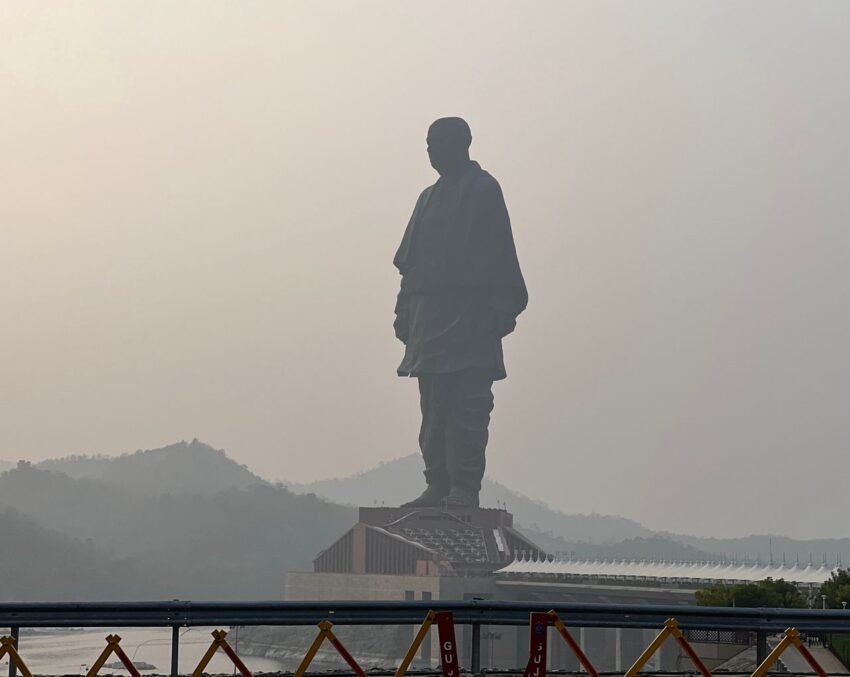
Under the Indian Independence Act of 1947, these states were technically free to accede to India, join Pakistan, or declare independence. The task of integrating these sovereign entities into a single, unified democratic republic fell to India’s First Deputy Prime Minister and Home Minister, Sardar Vallabhbhai Patel, ably assisted by the Secretary of the States Department, V.P. Menon. Through a combination of diplomatic tact, economic pressure, patriot appeals, and decisive military force, Patel earned the title “Iron Man of India.”
1. The Challenge of Paramountcy and Patel’s Approach
With the end of colonial rule, British Paramountcy lapsed, creating a legal power vacuum. Some ruler rulers—such as those of Travancore, Bhopal, and Hyderabad—expressed ambitions of declaring independence, threatening to leave India riddled with hostile enclaves.
                  SARDAR PATEL'S DIPLOMATIC STRATEGY
  ===================================================================
                  CARROT AND STICK APPROACH
  ===================================================================
                                 |
           +---------------------+---------------------+
           |                                           |
           v                                           v
  [ THE CARROT (DIPLOMACY) ]                  [ THE STICK (FIRM PRESSURE) ]
  • Appealed to patriotism and shared culture.  • Warning against economic isolation.
  • Offered **Privy Purses** (tax-free stipes). • Implicit or explicit threat of
  • Allowed rulers to retain private property.   popular uprisings & military action.
  • Ceded control over only 3 subjects:          if accession was refused.
    **Defense, Foreign Affairs, & Comms**.
On July 5, 1947, Patel issued a landmark appeal to the princes, asking them to join the Indian Union in the spirit of nation-building:
“We are at a momentous stage in the history of India… I hope the Indian States will realize that the only alternative to a joint endeavor and common endeavor is anarchy and chaos.”— Sardar Vallabhbhai Patel
2. The Instrument of Accession and Stage-Wise Integration
Patel and V.P. Menon devised a two-stage strategy to absorb the states legally and administratively:
                    STAGES OF UNIFICATION
  +-------------------------------------------------------------------+
  | STAGE 1: SIGNING THE INSTRUMENT OF ACCESSION                      |
  | Rulers surrendered sovereignty over Defense, External Affairs,    |
  | and Communications while retaining internal autonomy.             |
  +-------------------------------------------------------------------+
                                    |
                                    v
  +-------------------------------------------------------------------+
  | STAGE 2: ADMINISTRATIVE INTEGRATION                               |
  | Smaller states were merged into surrounding provinces or combined |
  | into unions (e.g., PEPSU, Saurashtra, Matsya Union). Rulers       |
  | signed **Merger Agreements**, surrendering internal administration.|
  +-------------------------------------------------------------------+
By August 15, 1947, the vast majority of princely states had signed the Instrument of Accession. However, three key states posed severe diplomatic and military challenges: Junagadh, Hyderabad, and Jammu & Kashmir.
3. Resolving the Three Critical Enclaves
                 THE THREE CONTESTED STATES (1947–1948)
  ===================================================================
                        CHALLENGES & RESOLUTIONS
  ===================================================================
                                 |
     +-------------------+-------+-------+-------------------+
     |                   |               |                   |
     v                   v               v                   v
  [ JUNAGADH (1947) ]      [ HYDERABAD (1948) ]    [ JAMMU & KASHMIR (1947) ]
  Muslim ruler acceded to  Nizam sought independence; Hari Singh delaying; Pakistani
  Pakistan despite Hindu   Razakars terrorized civilians. tribal invasion forced signing
  majority. Resolving via  Resolved via military action of Instrument of Accession;
  Plebiscite (99%+ India). (**Operation Polo**).       Indian troops deployed.
A. Junagadh (Gujarat)
Junagadh was a Hindu-majority state surrounded by Indian territory, whose ruler, Nawab Muhammad Mahabat Khan III, announced accession to Pakistan in August 1947.
-
Action: Patel deployed economic blockades and supported the formation of a provisional government (Arzi Hukumat) led by Samaldas Gandhi.
-
Resolution: The Nawab fled to Karachi. Indian forces stepped in to maintain order, and a plebiscite held in February 1948 resulted in over 99% of the population voting to join India.
B. Hyderabad: Operation Polo (September 1948)
Hyderabad was the largest and wealthiest princely state, ruled by Nizam Mir Osman Ali Khan. The Nizam refused to accede, aspiring to maintain an independent state surrounded entirely by Indian territory.
-
The Crisis: The Nizam’s fanatical paramilitary force, the Razakars (led by Kasim Razvi), launched a reign of terror against the Hindu majority and political dissidents, threatening regional security.
-
Military Intervention: On September 13, 1948, Patel launched a police action code-named Operation Polo under Major General J.N. Chaudhuri.
-
Resolution: After five days of military action, the Nizam surrendered on September 17, 1948, and signed the Instrument of Accession, integrating Hyderabad into India.
C. Jammu & Kashmir (October 1947)
Jammu & Kashmir was a Muslim-majority state ruled by a Hindu monarch, Maharaja Hari Singh, who initially sought to remain independent via a Standstill Agreement.
-
The Catalyst: In October 1947, armed Pashtun tribal raiders backed by the Pakistani military invaded Kashmir, advancing rapidly toward Srinagar.
-
The Accession: Hari Singh appealed to India for military assistance. Patel and Nehru insisted that military aid required legal accession. On October 26, 1947, Maharaja Hari Singh signed the Instrument of Accession.
-
Military Action: Indian troops were airlifted to Srinagar, successfully defending the Kashmir Valley, though a section of the state remained under Pakistani control, leading to the ongoing Kashmir dispute.
4. Key Players in the Integration Process
| Leader | Role & Strategic Contribution |
| Sardar Vallabhbhai Patel | Minister of States; master strategist whose combination of firmness and diplomacy unified the nation. |
| V.P. Menon | Secretary of the States Department; legal strategist who drafted the Instrument of Accession and negotiated merger agreements. |
| Lord Mountbatten | Governor-General of India; leveraged his royal ties to persuade princes that independence was untenable. |
| Samaldas Gandhi | Leader of the Arzi Hukumat (Provisional Government) in Junagadh. |
| Major General J.N. Chaudhuri | Field commander of Indian forces during Operation Polo in Hyderabad. |
5. Overview of the Integration Process
| Parameter | Details & Historical Milestones |
| Total Princely States | 565 States (spanning ~40% of India’s territory). |
| Key Legal Document | Instrument of Accession / Merger Agreements. |
| Compensation Mechanism | Privy Purses (Annual tax-free payments abolished in 1971 by the 26th Amendment). |
| Major Military Actions | Operation Polo (Hyderabad, Sept 1948), Kashmir Defense (Oct 1947). |
| Final Result | Complete territorial integration of South Asia’s vast interior into the Indian Union. |
6. Historical Significance and Legacy
Sardar Patel’s successful integration of the princely states is widely regarded as one of the greatest administrative feats of the 20th century:
-
Prevention of Balkanization: Patel’s firmness prevented the emergence of dozens of small, hostile enclaves within India’s borders.
-
Foundation of Democratic Unity: By dismantling autocratic feudal structures, the integration laid the foundation for uniform constitutional rule, democratic elections, and administrative coherence across the subcontinent.
-
Creation of Modern State Framework: The merged states were combined into larger administrative units, establishing the map for the States Reorganisation Act of 1956.
Category: History of India