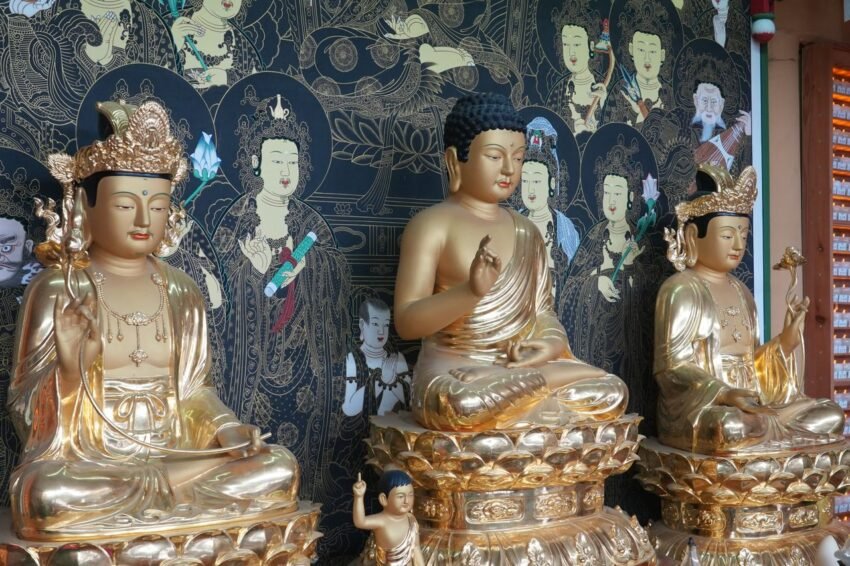
During the 6th century BCE, an era marked by rapid urbanization and political transformation across the Gangetic plains, a profound intellectual revolution swept through northern India. As traditional Vedic rituals grew increasingly complex and costly, spiritual seekers—known as Sramanas—began questioning caste rigidity and animal sacrifices.
Out of this climate of philosophical inquiry emerged Siddhartha Gautama, later known as the Buddha (“The Awakened One”), whose spiritual insights established one of the world’s most influential religious and philosophical traditions.
1. The Journey from Prince to Enlightened Teacher
Born into the aristocratic Shakya clan in Lumbini (present-day Nepal), Siddhartha spent his early life in luxury at his family’s palace in Kapilavastu. However, encounters outside the palace walls—traditionally referred to as the Four Sights—transformed his life trajectory:
-
An old man, revealing the inevitability of aging.
-
A sick man, highlighting physical suffering and disease.
-
A corpse, demonstrating the reality of death.
-
A wandering ascetic, embodying peace amid worldly suffering.
Driven to find a solution to human suffering, 29-year-old Siddhartha renounced his royal inheritance—an event called the Maha-bhinishkramana (The Great Departure). After years of practicing severe asceticism alongside various teachers, he realized that extreme self-denial was just as ineffective as sensory indulgence.
Adopting a balanced approach—the Middle Way (Madhyama Pratipat)—he sat in meditation under a pipal tree in Bodh Gaya. At age 35, he attained Supreme Enlightenment (Nirvana).
2. Core Doctrines of Early Buddhism
The Buddha delivered his first sermon, known as the Dhammacakkappavattana Sutta (“Turning the Wheel of Dhamma”), to five ascetics at the Deer Park in Sarnath near Varanasi. His core teachings centered on practical psychological insights rather than metaphysical speculation:
                  THE FOUR NOBLE TRUTHS
    +-------------------------------------------------+
    | 1. Dukkha (Life involves suffering)             |
    | 2. Samudaya (Suffering originates from desire)  |
    | 3. Nirodha (Suffering can be ended)             |
    | 4. Magga (The path leading to end of suffering) |
    +-------------------------------------------------+
                            |
                            v
               THE NOBLE EIGHTFOLD PATH
    +-------------------------------------------------+
    |  Ethical Conduct (Sila)    | Right Speech,     |
    |                            | Action, Livelihood|
    |  Mental Discipline (Samadhi)| Right Effort,    |
    |                            | Mindfulness,      |
    |                            | Concentration     |
    |  Wisdom (Panna)            | Right View,       |
    |                            | Intention         |
    +-------------------------------------------------+
Key Philosophical Tenets:
-
Anicca (Impermanence): All compounded phenomena are in a constant state of flux.
-
Anatta (Non-Self): There is no permanent, unchanging soul (Atman); individuals are dynamic combinations of five aggregates (Skandhas).
-
Pratityasamutpada (Dependent Origination): Every phenomenon arises in dependence upon specific conditions; nothing exists in isolation.
3. Organizational Genius: The Sangha and Equality
A major factor in the rapid spread of Buddhism was the establishment of the Sangha—the monastic order of monks (Bhikkhus) and nuns (Bhikkhunis).
Unlike the contemporary social system, the Sangha was egalitarian. The Buddha accepted members from all backgrounds—including Brahmins, merchants, farmers, and untouchables—without regard to caste or social status. Women were also admitted to the order, establishing an early institution for female spiritual independence.
Monks lived as renunciants during most of the year, traveling to teach local communities in vernacular languages like Pali, rather than elite Sanskrit. During the monsoons, they gathered in seasonal retreats (Vassa), which gradually evolved into permanent monasteries (Viharas) and centers of learning.
4. Spread of Early Buddhism and the Buddhist Councils
Following the Buddha’s death (Parinirvana) at Kushinagar around 483 BCE, the Sangha organized systematic assemblies to standardize his teachings and maintain monastic discipline.
| Council | Location | Patron King | Key Outcome / Text Canonized |
| 1st Council (c. 483 BCE) | Rajagriha | Ajatashatru | Composed Sutta Pitaka (teachings) & Vinaya Pitaka (rules). |
| 2nd Council (c. 383 BCE) | Vaishali | Kalasoka | Sangha split into Sthaviravadins (Elders) & Mahasanghikas. |
| 3rd Council (c. 250 BCE) | Pataliputra | Ashoka the Great | Compiled Abhidhamma Pitaka (philosophy); sent foreign missions. |
| 4th Council (c. 100 CE) | Kashmir | Kanishka | Codified Mahayana texts; split into Theravada & Mahayana. |
                       EVOLUTION OF CANONICAL TEXTS
                          (Tripitaka / Three Baskets)
                                      |
         +----------------------------+----------------------------+
         |                            |                            |
         v                            v                            v
  SUTTA PITAKA                 VINAYA PITAKA               ABHIDHAMMA PITAKA
(Discourses of Buddha)      (Rules for Monastic Life)     (Philosophical Analysis)
The Ashokan Catalyst
The conversion of Emperor Ashoka the Great in the 3rd century BCE transformed Buddhism from a regional Indian tradition into an international faith. Ashoka carved moral edicts on stone pillars across his empire and dispatched diplomatic envoys—including his children, Mahendra and Sanghamitra, who traveled to Sri Lanka—spreading Buddhist philosophy across Central Asia, Southeast Asia, and China.
5. Long-term Impact on World History
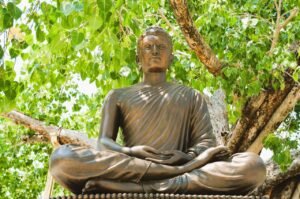
The legacy of Gautama Buddha profoundly altered the spiritual and cultural history of Asia. By prioritizing ethical living over ritualism and promoting universal compassion (Karuna) and non-violence (Ahimsa), early Buddhism fostered trade networks, inspired world-class monastic universities like Nalanda, and established a philosophical foundation that continues to influence modern ethical thought worldwide.
Category: History of India