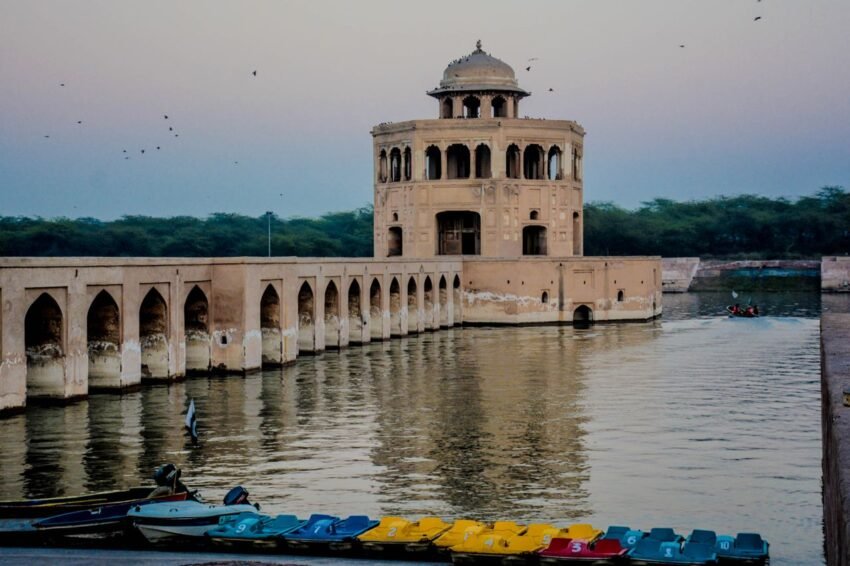
Despite ruling Northern India for a brief five-year period (1540–1545 CE), Sher Shah Suri (born Farid Khan) left an administrative blueprint that permanently altered South Asian governance. An Afghan leader who rose from managing his family’s small estate (jagir) in Sasaram, Bihar, Sher Shah defeated the Mughal Emperor Humayun at the battles of Chausa (1539 CE) and Kannauj (1540 CE) to establish the Sur Empire.
Recognizing that imperial stability required institutional rigor rather than absolute military force, Sher Shah overhauled land revenue, public infrastructure, currency standards, and provincial military oversight. His administrative model proved so effective that Akbar later adopted and refined it to build the administrative engine of the Mughal Empire.
1. Land Revenue Administration: The Patta and Qabuliyat
Before Sher Shah, agrarian tax collection across the Delhi Sultanate was notoriously arbitrary, leaving peasants vulnerable to extortion by local revenue collectors (Zamindars and Muqaddams). Sher Shah instituted a direct, measured, and transparent assessment system.
                  SHER SHAH'S AGRARIAN CONTRACT PIPELINE
  +-------------------------------------------------------------------+
  | Systematic Land Measurement: Standardized using the *Sikandari    |
  | Gaj* (31-inch measuring rod) and hemp ropes.                      |
  +-------------------------------------------------------------------+
                                    |
                                    v
  +-------------------------------------------------------------------+
  | Land Classification: Soil graded as Good, Middle, or Bad based on |
  | average yield schedules (*Rai*).                                   |
  +-------------------------------------------------------------------+
                                    |
                                    v
  +-------------------------------------------------------------------+
  | Legal Binding Contract: State issues *Patta*; Peasant signs       |
  | *Qabuliyat* agreeing to tax terms (1/3rd of produce in cash/kind).|
  +-------------------------------------------------------------------+
Key Elements of the Revenue Reform
-
The Patta (Title Deed): A formal state document given to the cultivator, clearly detailing the exact boundary of the land, its assessed yield, and the precise tax owed.
-
The Qabuliyat (Deed of Agreement): A written pledge signed by the peasant accepting the assessment terms and committing to pay the specified tax directly to the treasury.
-
Protection Against Crop Damage: During military campaigns, army units were forbidden from trampling standing crops. Any unavoidable damage was surveyed and compensated directly from state funds.
2. Infrastructure Genius: The Grand Trunk Road (Sadak-i-Azam)
To bind his empire together and encourage inter-provincial trade, Sher Shah rebuilt and expanded ancient arterial trade corridors into a comprehensive highway network.
The Sadak-i-Azam Network
The flagship arterial Highway, known as the Sadak-i-Azam (“Great Road”) and later renamed the Grand Trunk Road, spanned nearly 2,500 kilometers from Sonargaon (in modern Bangladesh) through Kolkata, Delhi, and Lahore, all the way to Peshawar (in modern Pakistan).
                     THE GREAT ARTERIAL CORRIDORS
  +-------------------------------------------------------------------+
  | SONARGAON (Bengal) ===> DELHI ===> LAHORE ===> PESHAWAR           |
  |-------------------------------------------------------------------|
  | Secondary Feeder Routes:                                          |
  | * Agra to Jodhpur and Chittor                                     |
  | * Agra to Burhanpur                                               |
  | * Multan to Lahore                                                |
  +-------------------------------------------------------------------+
The Sarais and Communication System
Along these highway corridors, Sher Shah constructed over 1,700 Sarais (fortified inns) situated at regular intervals of two kos (roughly 8 kilometers):
-
Dual Hospitality Facilities: Each Sarai provided separate lodging, fresh water, cooked food, and prayer quarters for both Hindu and Muslim travelers.
-
The First Postal Relay System: Every Sarai housed two swift horses and royal couriers (Dak Chowkis). Official dispatches, news reports, and intelligence moved across hundreds of kilometers a day via this continuous pony express.
-
Navigation Landmarks: Granite and brick pillars called Kos Minars were erected every two kilometers to mark distances and guide travelers safely.
3. Currency Standardizing and Market Reforms
Prior to the Sur dynasty, monetary circulation across North India was hindered by debased coinage, fluctuating exchange rates, and variable weights. Sher Shah abolished these fragmented systems and introduced a tri-metallic currency standard that endured for centuries.
| Currency Unit | Metal Composition | Standardized Weight | Historical Significance |
| Rupiya | Pure Silver | 178 Grains (~11.5 grams) | Direct predecessor to the modern Rupee used across South Asia. |
| Mohur | Pure Gold | 169 Grains | High-value currency used for state treasuries and wholesale trade. |
| Dam | Pure Copper | 330 Grains | Everyday fractional coin used by the general public (1 Rupiya = 40 Dams). |
To boost commercial activity, Sher Shah abolished all internal transit customs duties (Rahdari). Custom taxes were collected at only two entry points: when goods entered the country’s border and when they were sold inside domestic markets.
4. Administrative Structure and Local Accountability
Sher Shah restructured the provincial bureaucracy into a tight hierarchy designed to prevent regional lords from building independent power bases.
                   SUR DYNASTY ADMINISTRATIVE HIERARCHY
                       +---------------------------+
                       |    EMPIRE (Central Crown) |
                       +---------------------------+
                                     |
                                     v
                       +---------------------------+
                       |    SARKAR (Province)      |
                       | (Chief Shiqdar & Munsif)  |
                       +---------------------------+
                                     |
                                     v
                       +---------------------------+
                       |    PARGANA (District)     |
                       | (Shiqdar, Amin, Fotedar)  |
                       +---------------------------+
                                     |
                                     v
                       +---------------------------+
                       |    VILLAGE (Local Unit)   |
                       | (Muqaddam & Patwari)      |
                       +---------------------------+
Principle of Local Security Responsibility
To maintain public law and order, Sher Shah implemented a strict local accountability doctrine:
-
If a robbery or murder occurred along a highway, the local village headman (Muqaddam) and officials were required to track down the culprit and recover the stolen property.
-
If they failed to produce the culprit, the village council was legally obligated to pay full financial compensation to the victim from local village funds.
-
This policy made local communities actively protect trade routes, practically eliminating highway robbery during his reign.
5. Architectural Legacy and Historical Significance
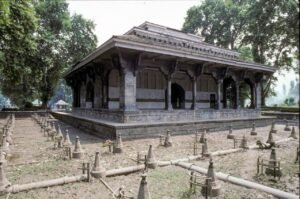
Sher Shah’s architectural projects reflect his functional approach to power. His magnificent mausoleum at Sasaram, Bihar—an octagonal sandstone structure set in the middle of an artificial lake—is considered a masterpiece of Indo-Islamic architecture.
Sher Shah’s untimely death in 1545 CE, caused by an gunpowder explosion during the siege of Kalinjar fort, cut short a period of transformative state-building. When Humayun re-conquered Delhi ten years later, he retained the administrative machinery built by the Afghan sovereign. Akbar subsequently built upon Sher Shah’s land measurement system, highway communications, and silver currency to construct the golden age of the Mughal state.
Category: History of India