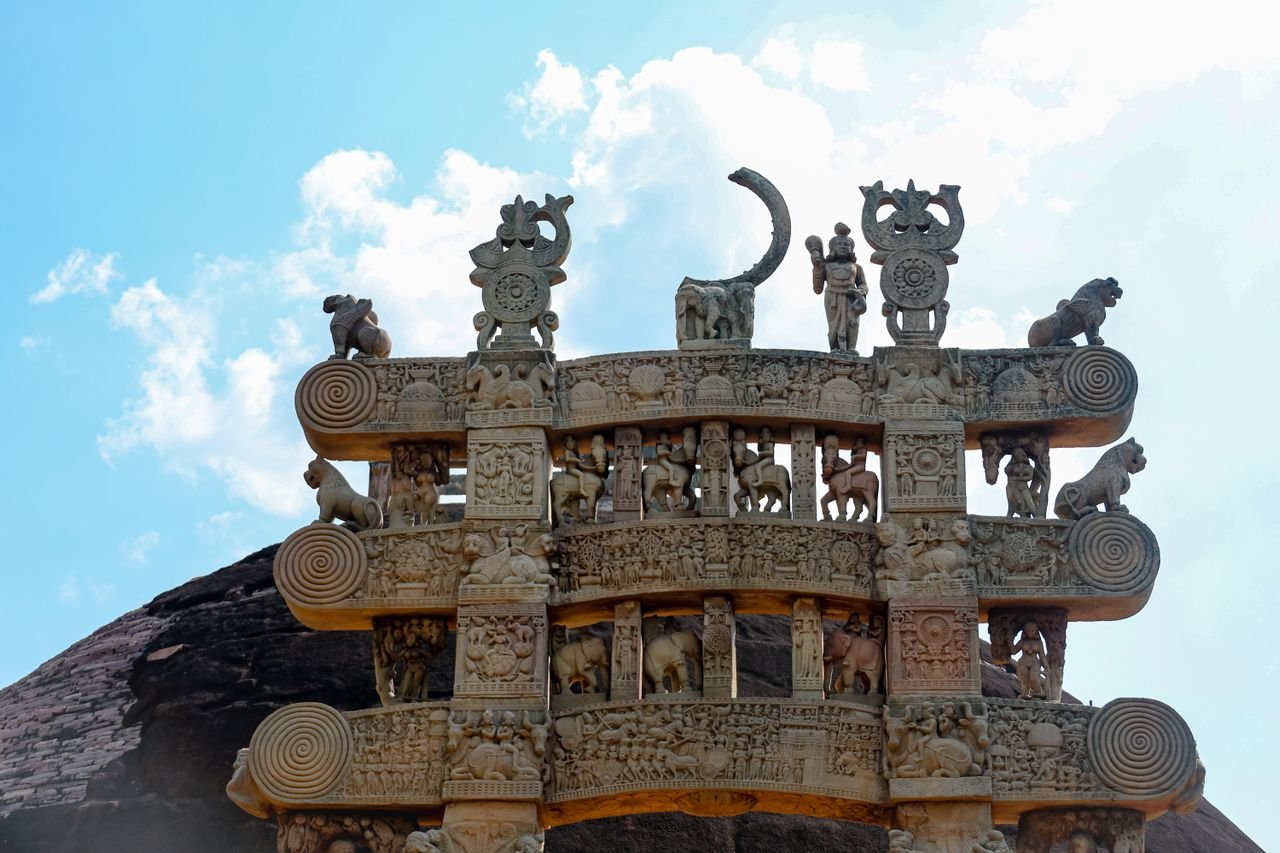
In the late 4th century BCE, northern India faced unprecedented political instability. The oppressive taxation of the powerful Nanda Dynasty in Magadha had alienated the populaces, while the conquest campaigns of Alexander the Great across the northwestern frontier left a political void in the Punjab region.
Out of this chaos arose India’s first pan-Indian empire: the Mauryan Empire (322 BCE – 185 BCE). Founded through an extraordinary alliance between a young, ambitious strategist named Chandragupta Maurya and an astute Brahmin scholar named Vishnugupta (popularly known as Chanakya or Kautilya), this empire unified the vast majority of the Indian subcontinent under a centralized administrative system.
1. The Overthrow of the Nandas and Imperial Consolidation
The narrative of the Mauryan rise is inextricably linked to the mentorship of Chanakya, a professor at the ancient university of Takshashila (Taxila). Humiliated by the Nanda ruler Dhana Nanda in the imperial court at Pataliputra, Chanakya vowed to dismantle the dynasty.
                    MAURYAN RISE TO POWER
  +-------------------------------------------------------+
  |  Strategic Mentorship (Chanakya at Takshashila)        |
  +-------------------------------------------------------+
                              |
                              v
  +-------------------------------------------------------+
  |  Consolidation of Punjab & Northwestern Territories   |
  +-------------------------------------------------------+
                              |
                              v
  +-------------------------------------------------------+
  |  Overthrow of Dhana Nanda & Siege of Pataliputra      |
  +-------------------------------------------------------+
                              |
                              v
  +-------------------------------------------------------+
  |  Defeat of Seleucus Nicator & Subcontinent Unification|
  +-------------------------------------------------------+
-
Northwestern Campaigns: Recognizing that a direct attack on Magadha’s heartland was risky, Chanakya and Chandragupta recruited local tribes, mercenaries, and regional warlords in the northwest, systematically securing control over the Punjab and Indus basin.
-
The Conquest of Magadha: Striking the weakened periphery of the Nanda realm first, Chandragupta gradually moved inward, culminating in a siege of Pataliputra (modern Patna) around 322 BCE. Dhana Nanda was overthrown, establishing the Maurya Dynasty.
-
Defeat of Seleucus Nicator: Around 305 BCE, Seleucus I Nicator, one of Alexander’s successor generals trying to reclaim Alexander’s eastern conquests, clashed with Chandragupta along the Indus River. Chandragupta decisively secured the western frontier, acquiring vast territories (including modern-day Afghanistan and Balochistan) in exchange for 500 war elephants. The treaty was sealed with a marriage alliance and the arrival of the Greek ambassador Megasthenes, whose lost work, Indika, provided priceless foreign accounts of Mauryan governance.
2. Kautilya’s Arthashastra: The Science of Statecraft
The administrative bedrock of the Mauryan state was the Arthashastra, a comprehensive treatise on political realism, economic policy, military strategy, and statecraft authored by Chanakya. Rejecting idealist abstractions, the text approaches governance with pragmatic rigor.
The Saptanga Theory (Seven Limbs of the State)
Chanakya defined a viable state as an organic entity composed of seven interdependent components:
| Limb | Sanskrit Term | Real-World Analogy | Function within the State |
| 1. The King | Swami | The Head | Absolute executive leader and moral guide. |
| 2. The Minister | Amatya | The Eyes | Bureaucracy, councilors, and administrative officers. |
| 3. The Territory | Janapada | The Legs | Fertile lands, resource base, and tax-paying population. |
| 4. The Fort | Durga | The Arms | Defensive fortifications safeguarding strategic zones. |
| 5. The Treasury | Kosha | The Mouth | Financial reserves generated through state taxation. |
| 6. The Army | Danda / Bala | The Mind | Standing military force maintaining internal & external security. |
| 7. The Ally | Mitra | The Ears | Foreign allies maintaining diplomatic equilibrium. |
3. Centralized Bureaucracy and Imperial Governance
Under Chandragupta, the Mauryan state developed a sophisticated, highly organized administrative apparatus centered at Pataliputra:
-
Departmental Superintendents (Adhyakshas): Specialized ministries oversaw crucial economic sectors, including agriculture, mining, trade routes, liquor manufacturing, weights and measures, and maritime customs.
-
The Espionage Network (Gudhapurushas): Chanakya designed an intricate network of spies, including stationary agents (Samsthas) and wandering operatives (Sancharas). Operating in secret across all levels of society, they monitored bureaucratic corruption, assessed public sentiment, and detected treason early.
-
Economic Centralization: The state maintained strict monopolies over key revenue streams like salt production, mining, and timber, while funding public irrigation works like the famous Sudarsana Lake reservoir in Junagadh, Gujarat.
4. Renunciation and Philosophical Legacy
After ruling for over two decades and establishing an empire spanning from the Himalayas down to the Deccan plateau, Chandragupta Maurya abdicated the throne around 297 BCE in favor of his son, Bindusara.
Influenced by the Jain saint Bhadrabahu, Chandragupta embraced Jainism as a monk and traveled south to Sravanabelagola in modern Karnataka. There, he adhered to the ultimate Jain vow of Sallekhana (voluntary fasting unto death), illustrating the classic ancient Indian ideal of the sage-king who relinquishes absolute worldly power for spiritual liberation.
The founding of the Mauryan Empire by Chandragupta and Chanakya transformed the political philosophy of the Indian subcontinent, demonstrating how strategic brilliance combined with administrative discipline could build a unified, enduring empire.
Category: History of India