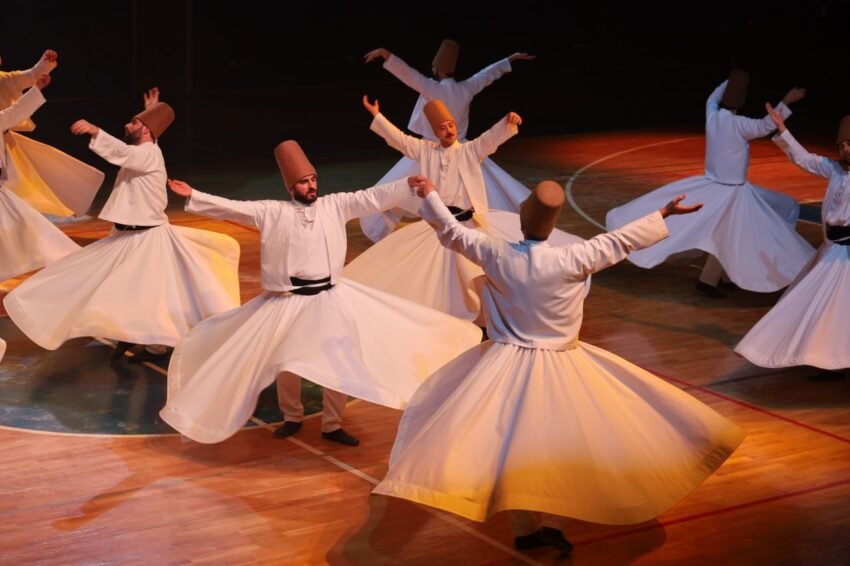
Parallel to the devotional wave of the Bhakti Movement, medieval India witnessed a profound spiritual transformation through Tasawwuf (Sufismus). Arriving in the subcontinent from Central Asia and Persia around the 11th and 12th centuries CE, Sufi mystics sought a direct, personal experience of the Divine through love, ascetic discipline, and selfless service to humanity.
By establishing Khanqahs (hospices) across rural and urban centers, Sufi orders (Silsilas) bridged deep cultural and religious divides. Their open-door philosophy fostered a unique Ganga-Jamuni Tehzeeb—a syncretic culture that deeply integrated Islamic mysticism with indigenous Indian traditions.
1. Major Sufi Orders (Silsilas) in India
While several Sufi lineages took root in South India and the Gangetic plains, four major orders exercised significant influence over the socio-religious life of the Delhi Sultanate and Mughal eras:
                          MAJOR SUFI ORDERS (SILSILAS)
                                       |
    +-----------------+----------------+----------------+-----------------+
    |                 |                                 |                 |
    v                 v                                 v                 v
 CHISHTI           SUHRAWARDI                        QADIRI           NAQSHBANDI
* Universal love  * Accepted state patronage        * Strict adherence * Orthodox reaction
* Voluntary poverty* Centered in Punjab/Sindh        to Islamic law    * Promoted reform
* Music (*Sama*)  * Key: Bahauddin Zakariya          * Key: Miyan Mir  * Key: Ahmad Sirhindi
Among these, the Chishti Silsila became the most widely embraced order across the subcontinent due to its rejection of courtly politics, embrace of local languages, and emphasis on universal benevolence (Sulh-i-Kul).
2. The Chishti Order: Masters and Expansion
Introduced to India by Khwaja Moinuddin Chishti in the late 12th century, the Chishti order established its primary spiritual center at Ajmer, Rajasthan. The order flourished through an unbroken line of revered spiritual masters (Shaykhs):
Key Luminaries of the Chishti Lineage:
-
Khwaja Moinuddin Chishti (Gharib Nawaz – “Protector of the Poor”, 1141–1236 CE): Settled in Ajmer, emphasizing that the highest form of devotion is “redressing the misery of those in distress, fulfilling the needs of the helpless, and feeding the hungry.”
-
Baba Fariduddin Ganj-i-Shakar (1179–1266 CE): Based in Pakpattan (Punjab), Baba Farid composed mystical verses in local Punjabi, which were later enshrined in the Sikh holy scripture, the Guru Granth Sahib.
-
Hazrat Nizamuddin Auliya (Mahbub-i-Ilahi – “Beloved of God”, 1238–1325 CE): Guided the order from his Khanqah in Delhi for over six decades. He famously maintained total independence from royal courts, ignoring summonses from multiple Sultans of Delhi.
-
Nasiruddin Chirag-dehlavi (1274–1356 CE): Maintained the Chishti tradition in Delhi during the turbulent relocations of Muhammad bin Tughlaq.
3. Institutional Pillars: The Khanqah and Langars
The Khanqah (hospice) served as the operational heart of Sufi life. Built around the residence of a Shaykh, it functioned simultaneously as a spiritual retreat, community kitchen, and refuge for travelers.
                    THE KHANQAH COMMUNITY SYSTEM
  +---------------------------------------------------------------+
  | Open Access    | Welcomed all individuals regardless of caste,|
  |                | creed, gender, or social background.         |
  |----------------|----------------------------------------------|
  | Futuh System   | Dependent entirely on unasked-for charity;   |
  |                | state land grants were routinely declined.   |
  |----------------|----------------------------------------------|
  | Free Kitchen   | The *Langar* distributed free vegetarian-   |
  | (*Langar*)     | friendly meals continuously to the needy.    |
  +---------------------------------------------------------------+
This commitment to egalitarian community care made Sufi hospices focal points for local populations, laying a ground-level foundation for inter-faith harmony.
4. Cultural Synthesis: Sama, Qawwali, and Literature
The Chishtis believed that music and poetry possessed a unique capacity to awaken divine love in the human heart—a practice known as Sama (spiritual audition).
Amir Khusrau and the Birth of Qawwali
The most brilliant cultural product of this synthesis was Amir Khusrau (1253–1325 CE), a devoted disciple of Nizamuddin Auliya. A polymath poet, musician, and historian, Khusrau transformed North Indian classical arts:
-
Invention of Qawwali: Combined Persian poetic structures with Indian musical ragas to create Qawwali, a genre of devotional song that remains popular across South Asia.
-
Linguistic Blending: Wrote in Hindavi (an early form of Hindi/Urdu), bridging courtly Persian with popular folk dialects through riddles, songs, and couplets.
-
Musical Innovations: Credited with adapting the Sitar and developing musical forms like the Khayal and Tarana.
                     GENESIS OF SYNCRETIC DEVOTIONAL MUSIC
  Persian Mystical Poetry  +  Indian Raga Systems  +  Hindavi Dialects
                                        |
                                        v
                                 QAWWALI & SAMA
5. Sufi-Bhakti Convergence and Legacy
The Sufi movement operated in tandem with the contemporary Bhakti Movement. Both traditions challenged rigid orthodoxy, rejected caste barriers, used vernacular languages, and emphasized the inner journey to God through love (Ishq / Bhakti).
Comparative Synthesis
| Aspect | Sufi Tradition | Bhakti Tradition |
| Core Concept | Tawhid (Unity of Divine) via Ishq (Love). | Moksha through Bhakti (Devotion). |
| Institutional Hub | Khanqah / Dargah (Shrine). | Matha / Mandir / Satsang. |
| Key Practices | Dhikr (Remembrance), Sama (Devotional Music). | Kirtan, Nama-Simran (Chanting Names). |
| Social Impact | Dismantled social barriers via communal Langars. | Challenged caste purity and ritualistic dominance. |
The Dargah as a Living Legacy
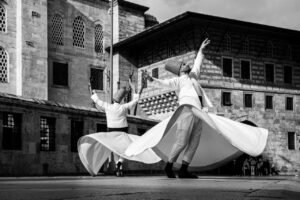
Following the passing of a Sufi master, his tomb (Dargah) became a major pilgrimage destination, celebrated annually during the Urs (the anniversary of the saint’s union with the Divine). Shrines like Ajmer Sharif and Nizamuddin Dargah continue to welcome millions of devotees across all faiths, standing as living monuments to ancient India’s syncretic heritage.
Category: History of India