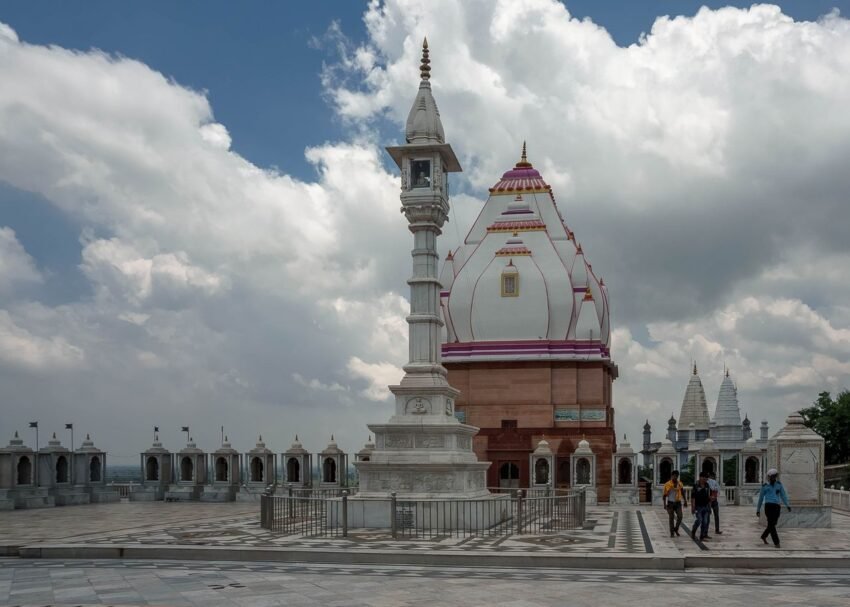
Alongside the emergence of early Buddhism in the 6th century BCE, another major spiritual tradition of the Sramana movement reached its definitive shape in the Gangetic plains: Jainism. While Jain tradition traces its lineage through a succession of 24 spiritual teachers known as Tirthankaras (“ford-makers” who guide souls across the ocean of rebirth), it was the 24th Tirthankara, Vardhamana Mahavira, who reorganized, revitalized, and systematically codified its core philosophical foundation.
Revering all living beings and emphasizing strict ethical discipline, Jainism offered a profound metaphysical alternative to Vedic ritualism.
1. Life of Vardhamana Mahavira
Born around 599 BCE into a Kshatriya royal family at Kundagrama near Vaishali (in modern-day Bihar), Vardhamana was a contemporary of Gautama Buddha. Raised in royal comfort, he demonstrated a deep inclination toward spiritual contemplation from early youth.
-
Renunciation: At age 30, following the passing of his parents, Vardhamana renounced his kingdom, family, and worldly possessions to pursue spiritual truth as a solitary ascetic.
-
Asceticism: For twelve and a half years, he subjected himself to intense physical penance, extended periods of silent meditation, and strict fasting.
-
Kevala Jnana (Omniscience): At age 42, while meditating under a Sal tree on the banks of the Rijupalika River near Jimbhikagrama, Vardhamana attained Kevala Jnana—infinite knowledge and spiritual liberation.
Following his enlightenment, he came to be known as Mahavira (“Great Hero”) and Jina (“Conqueror” of internal passions), from which the term Jainism originates. For the next thirty years, Mahavira traveled across the Magadhan region, preaching his spiritual message before attaining Moksha (liberation) at Pavapuri at age 72.
2. Core Doctrines: The Five Great Vows (Pancha Mahavratas)
Mahavira built upon the teachings of the 23rd Tirthankara, Parshvanatha (who had established four vows), by introducing a fifth vow—chastity—and formalizing the monastic discipline.
                  THE FIVE GREAT VOWS (MAHAVRATAS)
    +-------------------------------------------------------------+
    | 1. AHIMSA        | Non-violence in action, speech, & thought|
    | 2. SATYA         | Absolute truthfulness                    |
    | 3. ASTEYA        | Non-stealing or non-covetousness         |
    | 4. BRAHMACHARYA  | Chastity and celibacy                    |
    | 5. APARIGRAHA    | Non-possession / detachment from wealth |
    +-------------------------------------------------------------+
While monks and nuns observed these rules strictly as Mahavratas (Great Vows), householders followed a moderate version known as Anuvratas (Lesser Vows), allowing them to fulfill domestic and economic duties while maintaining high ethical standards.
3. Philosophical Pillars: Ahimsa, Anekantavada, and Karma
Jainism features a highly sophisticated metaphysical framework centered on three main principles:
1. Absolute Non-Violence (Ahimsa)
Ahimsa is the highest ethical virtue in Jain philosophy (Ahimsa Paramo Dharma). Jain cosmology asserts that souls (Jivas) exist not only in humans and animals, but also in plants, water, air, fire, and microscopic organisms. Consequently, practitioners avoid actions that cause harm to any form of life—inspiring strict vegetarianism and practices like filtering water and wearing cloth face-covers (Mukhapatti) to avoid inhaling micro-organisms.
2. Multi-Sided Reality (Anekantavada) and Perspective (Syadvada)
Jain epistemological theory holds that reality is complex and multifaceted. No single human perspective can capture the absolute truth.
-
Anekantavada: The doctrine that truth has many sides; dogmatic claims lead to intellectual error.
-
Syadvada: The conditional logic statement that every assertion is true only from a specific point of view (often illustrated by the parable of the blind men describing different parts of an elephant).
                   PERSPECTIVES OF TRUTH (SYADVADA)
                    +---------------------------+
                    |  Perspective A: "Is"       |
                    |  Perspective B: "Is Not"   |
                    |  Perspective C: Both      |
                    +---------------------------+
                                  |
                                  v
                    +---------------------------+
                    | Complete Understanding    |
                    |     (Anekantavada)        |
                    +---------------------------+
3. The Material Nature of Karma
Unlike traditions where karma is purely abstract or divine, Jainism views karma as a subtle form of physical matter (Karma-varganas). Negative actions and internal passions (anger, greed, pride, deceit) cause karmic particles to stick to the soul, weighing it down in the cycle of rebirth (Samsara). Liberation requires clearing accumulated karma through penance and self-discipline.
4. The Three Jewels (Triratna) and Spiritual Liberation
Jain philosophy outlines a clear path to break free from karmic bondage and achieve Moksha, known as the Three Jewels:
-
Samyak Darshana (Right Faith): Conviction in spiritual truths and correct worldview.
-
Samyak Jnana (Right Knowledge): True understanding of soul (Jiva) and non-soul (Ajiva).
-
Samyak Charitra (Right Conduct): Living in alignment with the Five Great Vows without distraction.
5. Schism and Legacy: Digambaras and Svetambaras
Around the 3rd century BCE, a severe drought in Magadha led a section of the Jain Sangha—headed by Bhadrabahu—to migrate south to Karnataka. The group that remained in the north under Sthulabhadra adapted to changing conditions by wearing white garments. This cultural shift eventually led to a formal division into two main schools:
-
Digambara (“Sky-clad”): Practiced complete nudity for monks as a symbol of absolute non-possession, held that women must be reborn as men to attain final liberation, and recognized unwritten oral traditions as primary scriptures.
-
Svetambara (“White-clad”): Monks wore simple white robes, recognized female ascetics’ capacity for direct liberation, and compiled canonical texts (Angas) at councils like Pataliputra and Vallabhi.
6. Historical Impact
Vardhamana Mahavira’s emphasis on Ahimsa profoundly shaped Indian culture, art, and philosophy over the centuries. Jainism’s rigorous ethical standards influenced prominent historical figures—including Mahatma Gandhi, who adopted Ahimsa as a core strategy in India’s independence movement. Furthermore, Jain contributions to logic through Anekantavada remain a valuable model for modern philosophical discourse and pluralism.
Category: History of India